Rats Don't Ask Permission
One morning, a home owner in Surrey observed shallow tunnels jogging alongside the base of their backyard fence. Then got here the gnawed vegetable beds. Then the unmistakable droppings close to the compost heap. By the time the symptoms have been undeniable, the rats had already settled in — comfortable, well-fed, and absolutely unbothered.
That situation performs out in lots of UK gardens each and every year, mainly between autumn and early spring when rats are trying to find warmth, shelter, and meals sources. And whilst many human beings anticipate pest manipulate is some thing referred to as in as a closing resort, the smarter strategy is prevention — understanding which repellents and deterrents sincerely work exterior in the UK's unique local weather and conditions, and grasp why they work earlier than attaining for the nearest product on a shelf.
Finding the best outdoor rat repellent UK gardeners can genuinely rely on isn't about a single silver-bullet solution. It's about layers — combining physical deterrents, scent-based repellents, habitat management, and where necessary, targeted control methods. Here's how to think about it properly.

Why Rats Target Gardens in the First Place
Before anything else, it's worth asking what's drawing them in. Rats aren't random. They're driven by three things: food, water, and shelter. A garden that offers any combination of these becomes a viable habitat almost immediately.
Bird feeders are a significant culprit — spilled seed on the ground is essentially a free buffet. Compost bins without secure bases attract rats that burrow underneath. Dense ivy, log piles, decking with gaps underneath — all of these become nesting opportunities. Even a dripping outdoor tap can be enough to make a spot attractive.
The implication is straightforward: no repellent in the world will keep rats away long-term if the garden remains fundamentally inviting. Repellents work best as part of a broader strategy, not as a standalone fix.
Ultrasonic Repellents: Promising in Theory, Complicated in Practice
Ultrasonic pest repellers have become popular in recent years — small devices that emit high-frequency sound waves intended to disturb rodents. They're widely marketed, reasonably priced, and feel satisfyingly modern.
The honest assessment? Mixed results. Ultrasonic devices can be effective in the short term, particularly in enclosed or semi-enclosed spaces. Outdoors, their range is significantly limited by physical obstacles — fences, shrubs, uneven ground — and rats are known to habituate to consistent stimuli over time. A device that works for two weeks may become background noise to a determined rodent by week three.
That said, rotating ultrasonic devices across different garden zones, rather than leaving them static, does appear to extend their effectiveness. Worth trying. Just not worth relying on exclusively.
Natural and Scent-Based Deterrents
This is where things get more interesting — and more nuanced. Rats have a effective experience of smell, and sure scents without a doubt register as risk indicators or virtually as disagreeable ample to avoid.
Peppermint oil is one of the most generally stated herbal deterrents, and the proof is reasonable. Cotton balls soaked in pure peppermint oil and positioned close to entry points, burrow openings, or feeding areas can deter rats from settling. The key phrase is pure — diluted variations from craft retail outlets have a tendency to be too vulnerable to make an impact Reapplication every few days is necessary, especially after rain.
Predator urine — fox urine specifically — triggers an instinctive avoidance response in rats. Products containing fox urine or synthetic equivalents are available from UK garden centres and online pest suppliers. Sprinkled around the garden perimeter, they can create a psychological barrier. Strange product to describe, admittedly. But it does work.
Chilli powder and cayenne pepper sprinkled around plant beds and compost areas also show results, though again — rain washes them away quickly, requiring consistent maintenance.
Citronella and eucalyptus are less effective than the options above for rats specifically, despite being reasonable insect deterrents. Worth mentioning only because they're frequently recommended — and frequently disappointing.
Physical Exclusion: The Most Underrated Approach
Repellents address the symptom. Physical exclusion addresses the cause. And in terms of long-term garden rat control, it's arguably the most effective single method available.
Key steps include:
- Securing compost bins with solid bases or placing them on paving slabs to prevent burrowing beneath
- Blocking gaps under decking and sheds with wire mesh — specifically galvanised weld mesh (13mm gauge), which rats cannot easily chew through
- Using rat-proof bird feeders positioned on poles with baffles, with seed catchers underneath to intercept spillage
- Removing dense groundcover near fence lines where possible, particularly ivy and bramble which provide ideal nesting material
- Fitting drain guards to external drainpipes, as rats are competent climbers and regularly enter gardens via drainage infrastructure
None of these require ongoing maintenance in the same way repellents do. Done once, done properly — they substantially reduce a garden's appeal to resident rodents.
Bait Stations for Rats: Understanding When and How to Use Them
When prevention and deterrence haven't been sufficient — or when an active infestation has already established — bait stations for rats become a necessary part of the control toolkit.
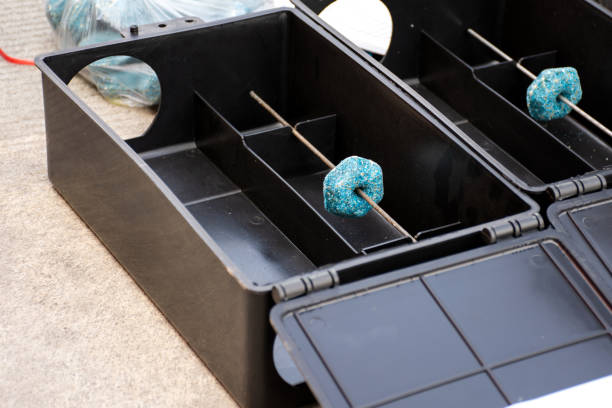
A bait station is a tamper-resistant enclosed box containing rodenticide bait. The enclosed design matters: it protects children, pets, and non-target wildlife, and creates a dark, sheltered space that rats — drawn instinctively to enclosed spaces — are far more likely to enter than open bait.
In the UK, rodenticide use is legal but regulated. First-generation anticoagulants are available to the public; second-generation variants carry stricter guidance. The Campaign for Responsible Rodenticide Use (CRRU) publishes current recommendations worth checking before purchasing.
Placement is critical. Position stations along rat runs — the regular pathways between nest and food source, typically along walls and fence lines. Check and replenish every three to four days. If bait remains untouched after a week, relocate the station.
Integrating Everything: A Practical Garden Rat Control Strategy
Rather than treating these methods as competing options, the most effective approach combines them in sequence:
- Audit the garden for attractants — remove or secure food sources, water access, and shelter opportunities
- Apply physical exclusion measures — mesh, guards, and secure composting infrastructure
- Use scent-based deterrents around entry points and perimeter — peppermint oil, predator urine, chilli deterrents
- Deploy ultrasonic devices as supplementary deterrents, rotated regularly
- Introduce bait stations only if signs of active rodent presence persist — placed along confirmed rat runs, checked and maintained consistently
The order matters. Jumping straight to rodenticide without addressing attractants is a temporary fix at best. New rats will move into the same space within weeks if the habitat still suits them.
A Word on Timing
Rats breed rapidly. Getting ahead of a problem in early autumn — before nesting is established — is considerably easier than addressing an entrenched winter population.
Regular checks along fence lines, under decking, and near compost areas take five minutes and catch problems early. The moment fresh burrows, gnaw marks, or droppings appear, act immediately rather than waiting to see if it worsens. It almost always does.
Final Thought
Gardens are supposed to be pleasant places. The good news is that with the right combination of deterrents, exclusion work, and — where necessary — targeted control, keeping rats out is genuinely achievable. Not effortless. But achievable.
The key is treating it as an ongoing practice rather than a one-off fix. Rats are persistent, adaptable, and opportunistic. The response needs to match that.